India’s External Affairs Minister Subrahmanyam Jaishankar has said that Iran received nothing in exchange for allowing Indian-flagged vessels to pass through the strategically vital Strait of Hormuz, stressing that the development was the result of direct diplomatic engagement rather than any formal deal.
His remarks come days after two Indian-flagged liquefied petroleum gas carriers were allowed to sail through the waterway amid heightened tensions in the Middle East. The minister said ongoing communication between New Delhi and Tehran had proved to be the most effective way to ensure safe passage for Indian vessels.
Speaking in an interview with the Financial Times, Jaishankar described diplomacy and established ties between the two countries as the key factors behind the breakthrough.
“If it is yielding results for me, I would naturally continue to look at it,” he said, referring to his recent discussions with Iranian officials.
Direct Talks With Iran Prove Effective
According to Jaishankar, India did not reach any blanket arrangement with Iran regarding shipping through the strait. Instead, each vessel’s passage was handled individually through communication and coordination.
“There was no exchange involved,” the minister clarified, emphasising that India and Iran share a long-standing relationship that helped ease the situation.
“We have a history of dealing with each other… which is the basis on which I engaged,” he said, adding that the current crisis in the region was “very unfortunate.”
The comments highlight India’s preference for direct diplomatic channels during periods of geopolitical tension. With several Indian-flagged ships still waiting to cross the waterway, the government is continuing discussions with Iranian authorities to ensure their safe passage.
Indian Ships Navigate a Growing Conflict
The Strait of Hormuz has become one of the most sensitive maritime chokepoints in the world as tensions between the United States and Iran escalate.
Iran has reportedly targeted vessels linked to the United States and Israel, creating disruptions in shipping routes and affecting vessels from several other countries.
According to earlier reports, around 22 Indian-flagged vessels were stranded on the western side of the Persian Gulf during the peak of the crisis. However, four ships have since managed to pass through the conflict zone without incident.
The passage of the two LPG carriers last week came shortly after a phone conversation between Indian Prime Minister Narendra Modi and Iranian President Masoud Pezeshkian. The discussion was their first direct communication since tensions between Iran and the United States escalated into open confrontation.
Jaishankar also held talks with his Iranian counterpart Seyed Abbas Araghchi, which diplomats say helped ease concerns over the safety of Indian vessels navigating the area.
Why the Strait of Hormuz Matter
The Strait of Hormuz connects the Persian Gulf with the Gulf of Oman and the wider Arabian Sea. It is widely considered one of the world’s most important oil transit routes.
Roughly one-fifth of the world’s oil supply passes through this narrow waterway each day, making any disruption there a major concern for global energy markets.
Rising tensions have already pushed oil prices higher. As of Monday, crude prices were reportedly hovering around $100 per barrel as the conflict entered its third week.
The uncertainty has also prompted the United States to increase its naval presence in the region.
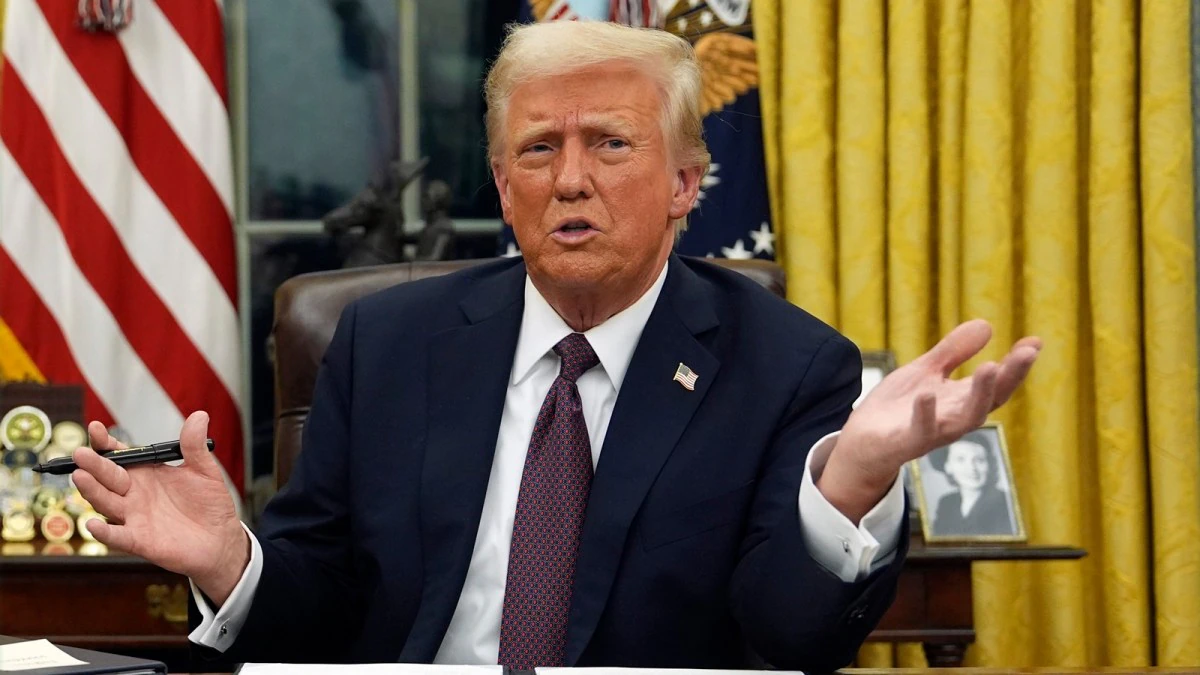
US President Donald Trump has indicated that American warships could be deployed to ensure the strait remains operational and to protect shipping lanes.
“It’s only appropriate that people who benefit from the Strait help ensure that nothing bad happens there,” Trump reportedly said, urging international partners to contribute to maritime security.
Iran Says Strait Open — With Exceptions
Despite the tensions, Iranian officials have insisted that the Strait of Hormuz has not been closed to international shipping.
Foreign Minister Abbas Araghchi recently stated that the waterway remains open for most countries, but ships linked to nations involved in attacks on Iran may be restricted.
“The Strait of Hormuz is open,” he said in an interview. “It is only closed to ships belonging to our enemies — those who are attacking us and their allies. Others are free to pass.”
This distinction has allowed vessels from several countries, including India, to continue navigating the route under careful monitoring.
A Delicate Diplomatic Balancing Act
For India, the situation highlights the importance of maintaining balanced relations with key players in the Middle East.
New Delhi has historically maintained diplomatic ties with both Iran and Western nations, allowing it to navigate complex geopolitical crises while safeguarding its economic interests.
With several Indian-flagged ships still expected to cross the Strait of Hormuz, officials say communication with Tehran will remain crucial.
Jaishankar’s remarks suggest that India will continue relying on diplomacy rather than negotiations involving concessions to ensure the safe movement of its vessels.
As tensions in the region continue, the ability to maintain dialogue with all sides may prove to be India’s most valuable asset in keeping critical trade routes open.
Also Read :Jaishankar Hails Talks With Iran to Reopen Strait of Hormuz