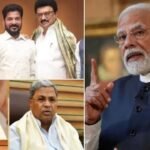
There was a significant political development in India today when the Lok Sabha failed to approve the Constitution (131st Amendment) Bill, 2026, which would have provided greater representation for women in the country’s legislative bodies. In order for this bill to have passed, it needed a two-thirds majority of the members of Parliament to vote in favour of it.
The Bill fell well short of that in the end by receiving 298 votes in support and 230 against it; it needed 337 total votes to pass as a constitutional amendment under Article 368 of the Constitution of India.
This is a major setback to the Government of India’s attempts to consider changes to the structure of parliamentary seats, as well as provide for an increase in the representation of women in legislative bodies.
Following the vote on the bill, much conversation occurred between members of parliament; ultimately, that discussion continued well into the early morning hours of today before finally ending.
What the Women’s Reservation Bill Proposed
The amendment of 33% women in the Lok Sabha and state legislatures has drawn support, as it would provide a larger number of women in elected office and achieve gender equality in governance.
However, the bill was linked to delimitation (redrawing voting districts) and would allow for a greater overall number of seats in Parliament, which created intense discord between the ruling party and the opposition.
The government claimed that the two pending bills on delimitation and increasing the total number of Lok Sabha seats were “inextricably linked” to the women’s reservation legislation, so they were not brought to a vote after the bill failed to pass.
Government’s Stand
During a parliamentary debate on the legislation to increase the number of women in politics, Prime Minister Narendra Modi made a strong case for the bill as a means of empowering women, rather than a political manoeuvre.
He asked members from all parties to view the bill as being in the best interests of the nation and stated that increasing the representation of women in India’s democracy would be essential to achieving this goal.
Similarly, Amit Shah also told MPs, especially those from southern states, that adding more Lok Sabha seats will not affect their current representation. He informed me that their representation will remain constant or could be slightly increased.
Government leaders also accused opposition parties of hindering a crucial reform that could have boosted women’s involvement in government.
Opposition’s Concerns
The bill’s connection to delimitation and the larger reorganisation of elections was strongly opposed by opposition party leaders. Rahul Gandhi claimed that the legislation was not really meant to empower women, but rather, the government was attempting to change India’s election map in a way that would benefit the ruling party.
Rahul Gandhi further illustrated that adding women’s reservation to the delimitation of the constituency would change the political structure of how state-level representatives are elected.
He also indicated that the only census lacking OBC (Other Backwards Classes) data, indicating that the bill overlooks OBC community representation. He accused the government of avoiding creating policies that grant adequate political representation to all underrepresented populations.
Priyanka Gandhi, another member of the Congress Party, echoed the same sentiments as Rahul. She has reiterated that providing reservations based on a census that did not include OBC data was not a fair way to create democratic representative bodies.
Opposition parties believe women’s reservation should be a separate issue from the proposed delimitation of constituencies.
Political Reactions After the Vote
After the bill was voted down, Kiren Rijiju said he was disappointed that the legislative body couldn’t pass the legislation. He suggested that the opposition party had missed a huge opportunity to come together to support a transformational piece of legislation that was aimed at increasing women’s representation in political offices.
He went on to say that the government would continue working towards ensuring that women are represented more frequently on boards within the government in the future.
Home Minister Amit Shah took to attacking the opposition parties — which included the Congress, Trinamool Congress, DMK, and Samajwadi Party — for stopping this bill. He said that by blocking it, these parties took the 33% reservation away from women in Parliament and/or State Assemblies.
He also predicted that the opposition parties would be punished politically by the women voter demographic when election time comes around.
On the other hand, Rahul Gandhi considered this a win for the opposition alliance and expressed that the introduction of this bill threatened to change the country’s overall electoral structure and attack the principles outlined in the Constitution.
Also Read: UK Study Finds Pollution May Trigger Diseases Earlier Than Expected