On the heels of his telephone call with Indian Prime Minister Narendra Modi, US President Donald Trump characterised PM Modi as an “ally”, a description demonstrating not only diplomacy but also a personal relationship between the two leaders. As well as describing their call as “very good”, President Trump’s comment had further implications for the international community as well.
Global tensions, particularly in the Middle East, have been growing and increasingly so between America and the other Western powers. Conversations between powerful leaders like PM Modi and President Trump are not merely routine; they are often indicative of coordination on critical global issues.
What The Leaders Discussed
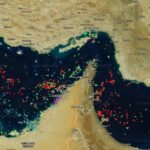
Earlier, PM Modi noted that the call focused on developing the relationship between India and the United States, as well as on reviewing the developments in Western Asia. One of the main points of discussion was the importance of keeping the Strait of Hormuz open and secure.
The Strait of Hormuz is one of the primary means by which oil is transported around the world. Any interruption to shipping through the strait would impact fuel prices, the flow of goods, and the stability of the economy on a global scale. It is also especially important to India, which relies heavily on imported energy, that the Strait of Hormuz remain open and secure.
More Than Just A Friendly Exchange
Trump’s casual comment calling Modi his “friend” demonstrates that they have a solid professional relationship; they have been consistently communicating and mutually cooperating in many areas, such as defence, trade, and technology, over time.
Having this type of relationship makes it easier to conduct diplomatic discussions; countries can more quickly agree on issues and build lasting partnerships well beyond the formal agreements between our respective nations.
West Asia In Focus
A critical moment for diplomacy in West Asia is right now—with countries and world leaders fighting to de-escalate an ongoing conflict. In addition to speaking about Modi, President Trump mentioned ongoing efforts to establish peace throughout the region.
As part of this, he talked about a “temporary ceasefire” that had been reached between Israel and Lebanon after discussions with leaders of those two countries and with Prime Minister Netanyahu; senior officials in the US government, such as Marco Rubio and JD Vance, are working towards achieving lasting stability in the region.
This demonstrates that multiple diplomatic avenues are being pursued by the US government and that India has been incorporated into those larger strategic discussions.
You may also like: Will South India Lose Power After Delimitation? The Real Math Explained
Why This Matters For India
The evolution of India’s place within the international political society is paramount as a nation. It isn’t a mere reactionary actor that reacts reactively to geopolitical variables; rather, it has begun to assume an active role in shaping global circumstances. India’s influence in the international realm is exemplified by high-level engagement in topics such as maritime security and the stability of the Indo-Pacific region.
Among the high-ranking diplomatic relationships that the nation has, India and the United States maintain one of the most critical ones. In these uncertain global political dynamics, the two nations encounter shared interests regarding the importance of securing trade routes, managing conflict, and maintaining stable economic conditions through cooperative diplomacy and communication.
The Road Ahead
While there is a positive sign from this dialogue between Trump and Modi, there are elevated expectations associated with its effectiveness. The actual results will rely predominantly on translating discussions into action on the ground.
Given the ongoing conflict in West Asia and uncertainty worldwide, partnerships will be pivotal moving forward. The relationship between India and the United States, supported by bilateral strategic ambitions and individual comprehension, will be critical in determining subsequent events.
Also Read: India Warns UN on Strait of Hormuz Crisis: A Threat to Global Trade and Energy