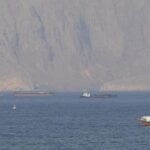
This is the first war at sea since the Second World War.
On Tuesday, Secretary of Defence Pete Hegseth announced that an American submarine had completely destroyed an Iranian warship in the Indian Ocean. The warship sank to the ocean floor just off the southern coast of Sri Lanka. This marks another major escalation of violence in the already edged conflict at this time.
“The Iranian ship died a quiet death after she was struck by a torpedo,” Secretary Hegseth stated during a press conference. “This is the first time since World War II that any US submarine has sunk an enemy vessel in this way.”
The Sinking of Iris Dena
This is the first war at sea since the Second World War.
On Tuesday, Secretary of Defence Pete Hegseth announced that an American submarine had completely destroyed an Iranian warship in the Indian Ocean. The warship sank to the ocean floor just off the southern coast of Sri Lanka. This marks another major escalation of violence in the already edged conflict at this time.
“The Iranian ship died a quiet death after she was struck by a torpedo,” Secretary Hegseth stated during a press conference. “This is the first time since World War II that any US submarine has sunk an enemy vessel in this way.”
Pentagon Releases Strike Footage
A ship that was hit by a missile was video-recorded by the US DOD after the destruction of the ship from a torpedo fired from a submarine. The rear of the ship lifted up out of the water and then exploded very violently.
Hegseth stated that the Iranian warship was probably thinking it was in a safe place (i.e., not in impending danger) in international waters when it was attacked. Also, he marketed it as having been a carefully planned military attack against that target (i.e., the Iranian Navy’s warship).
While this was the first documented use of a torpedo sunk by a US Navy submarine since 1945, it has occurred many times by other countries, such as British Navy submarines and Pakistan Navy submarines using torpedoes.
Wider Regional Conflict
The sinkings also come as tensions are increasing between the US and their allies and Iran, with Israel striking Iranian assets located in Tehran and southern Lebanese territories, along with Iran’s response through strikes at Iranian sites and fellow US-allied states such as Saudi Arabia and Kuwait and their territories and/or military vessels used to transport these missiles and/or missiles that were launched from Iranian maritime assets (ships, submarines, etc.) into these states’ territories.
The government of Sri Lanka has remained neutral in the ongoing situation. During his recent statement, Sri Lanka’s minister of foreign relations, Mr Vijitha Herath, stated that the situation needs restraint by both the US and Iranian governments as well as immediate de-escalation by both the US and Iranian forces.
The destruction of the Iris Dena represents the emergence of a new maritime dimension to the current conflict and demonstrates how rapidly regional flashpoints can become global flashpoints that involve countries outside of the region and require countries far from these occurrences to respond to the resulting humanitarian aspects of these actions.