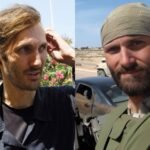
Matthew Aaron VanDyke became the focus of a serious investigation by investigators for the security of India. He was arrested in Kolkata, along with six others from Ukraine, by the National Investigation Agency (NIA) for their involvement in an alleged training programme for drones, making illegal crossings into India and their connection to armed groups operating in the northeastern area of India.
VanDyke’s Background
Matthew VanDyke gained international fame as a result of his involvement in the 2011 Libyan Civil War, where he volunteered for rebel forces and was later incarcerated for his role in the conflict. After leaving Libya, he established an organisation called Sons of Liberty International (SOLI) to provide military training and tactical advice to armed groups operating in various global conflict zones. He refers to himself as a war correspondent, video journalist, and security analyst.
Because of his history of training militia groups and working in war zones, he is a subject of interest to many foreign security agencies when he travels internationally. His recent presence in India has created further scrutiny due to the unstable security situation in Mizoram Pradesh and areas of southern Myanmar that border with India.
Arrest and Court Proceedings
In Kolkata, VanDyke was taken into custody. Both the Lucknow and Delhi arrests involved three Ukrainian nationals, bringing the total number of individuals being held and produced before the Patiala House Court in New Delhi to seven. The request of the National Investigation Agency for 15 days’ custody was granted by the court, who allowed the NIA to conduct an investigation into the means by which the individuals travelled, collect evidence of a conspiracy, and identify any other associates of the individuals. The court provided for 11 days of custody and directed the individuals to reappear in court on March 27, 2008.
Allegations Against the Group
In Kolkata, VanDyke was taken into custody. Both the Lucknow and Delhi arrests involved three Ukrainian nationals, bringing the total number of individuals being held and produced before the Patiala House Court in New Delhi to seven. The request of the National Investigation Agency for 15 days’ custody was granted by the court, who allowed the NIA to conduct an investigation into the means by which the individuals travelled, collect evidence of a conspiracy, and identify any other associates of the individuals. The court provided for 11 days of custody and directed the individuals to reappear in court on March 27, 2008.
Security Context
Mizoram is a region of India that is directly adjacent to Myanmar (510 kilometres), making it a highly sensitive area since 2021, when there was a military coup in Myanmar that resulted in continued civil war and a possibility of spillover violence into India. Mizoram’s Chief Minister, Lalduuoma, recently warned on 06-Mar-2025 about foreigners, including US and UK special forces veterans, entering through Mizoram into Myanmar for the purpose of training insurgents fighting the military junta. These arrests are an indicator of India’s increased alertness and use of anti-terrorist laws against foreigners believed to be aiding armed groups.
Evidence and Investigation
Investigators are collecting data from the mobile phones and any devices that were seized during the arrests to conduct their investigation and follow the accused to other locations as part of their ongoing investigation. Investigators are determining how much Van Dyke is involved and if anyone else helped facilitate military training illegally within India or across its borders.
In addition to the specifics of the investigation, the investigation has triggered a more extensive review of border management, especially in sensitive areas such as Mizoram, where foreign travellers are required to obtain special permits. Investigators will examine if the violations were intentional or if they weren’t aware of the laws and regulations of the area.
Diplomatic Dimensions
VanDyke is a US citizen; however, the US Embassy has chosen to take a conservative approach, citing privacy protocols, and has refused to comment on specific cases. Internationally, the incident garnered global attention due to the fact that numerous foreign citizens were arrested and that the activities for which they were arrested appear to be heinous in nature.
The matter raises significant concerns about the intersection of national security, foreign policy, and law enforcement. As India seeks to guard its borders from attacks and to prevent providing assistance to insurgency-type groups, a delicate balance exists regarding national security as opposed to individual rights.
Also Read; BCCI Sends Tough Message To Pakistan After Pahalgam Terror Attack: “Will Not Play…”