A moment that could change the Middle East – a moment that has the possibility of redefining modern Middle Eastern history as we have known it – has happened.
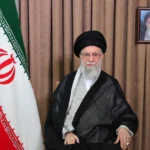
State media in Iran has reported that Supreme Leader Ayatollah Ali Khamenei was killed in a joint U.S./Israeli airstrike, along with Iranian defence and army chiefs and other leaders of high-level security agencies.
Tehran has declared 40 days of national mourning for the Supreme Leader; however, Iranian citizens have already moved past mourning and into anger and confusion about what is next for the country.
This is not simply the loss of a leader, but rather the loss of a solid dark and light foundation of Iran’s political and military identity for the past number of decades.
The Strike That Decapitated Iran’s Leadership
Iranian media claim airstrikes have hit high-profile Iranian military and governmental targets, including Iran’s Defence Council. All of the Iranian general’s members are reported dead, including General Abdol Rahim Mousavi and General Aziz Nasirzadeh (Minister of Defence), Rocket, and the Revolutionary Guard. Security advisers Ali Shamkhani and Khorasan member Razi Yolloh Khani are said to be among those who died.
State media report the number of casualties from the air strikes to be at least 201, with 700 or more injured from the air strike, with approximately 40 high-level officials among them. The air strikes appear to be part of a broader effort to take out Iran’s command and control structure in a highly targeted and sudden fashion.
Iran’s Swift Retaliation
Iranian media claim airstrikes have hit high-profile Iranian military and governmental targets, including Iran’s Defence Council. All of the Iranian general’s members are reported dead, including General Abdol Rahim Mousavi and General Aziz Nasirzadeh (Minister of Defence), Rocket, and the Revolutionary Guard. Security advisers Ali Shamkhani and Khorasan member Razi Yolloh Khani are said to be among those who died.
State media report the number of casualties from the air strikes to be at least 201, with 700 or more injured from the air strike, with approximately 40 high-level officials among them. The air strikes appear to be part of a broader effort to take out Iran’s command and control structure in a highly targeted and sudden fashion.
Washington’s Message and Rising Stakes
In response to the Khamenei death, US President Donald Trump responded almost immediately. He stated that Khamenei’s death presented an incredible opportunity for the people of Iran to take back their country and that the heavy precision bombing could last for days on end. He expressed that this attack was not simply a single act but rather part of a larger scheme.
US Navy vessels were moving into the area previously in support of the stalled nuclear negotiations; however, today these operations appear to be moving towards something other than diplomacy.
A Region Holding Its Breath
Removing Iran’s supreme leadership creates an opening that could set the course for the next 10 years. Hardliners could solidify control. Countries competing for power in the region might push boundaries. The people in those countries will bear the brunt of whatever results from this situation.
The current condition(s) of the region are somewhere in the middle of being shocked by events or escalating into conflict. Future historians will likely label this point in time as where the scales start to tip away from Iran and possibly lead to either the dismantling of the regime, reforming and/or potentially starting a larger-scale conflict with those around them depending on the outcome for each respective group involved.