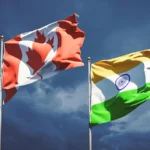
Two years without any communication can mark and change a relationship.
There have been the expulsion of diplomats, shutdowns of visa services, and decreased levels of trust. Finally, with the aid of careful planning for an event held in India’s capital city, New Delhi, a reset of the relationship between India & Canada has formally been announced.
During this event, Prime Minister Modi of India and Prime Minister Carney of Canada exchanged and signed off on what has been termed by each side as a ‘landmark’ civil nuclear energy agreement for the next 10 years as a demonstration and confirmation that the ‘chill’ or distance that had developed between these two countries is beginning to break up or thaw out.
From Diplomatic Freeze to Strategic Pact
Under this agreement Canada will provide U235 (or uranium-235) from Canada’s uranium resources to fuel India’s electricity generation and other nuclear energy programmes. In addition the two nations will work together on developing small modular nuclear reactors (SMRs) as well as advanced reactor technologies.
While speaking after the announcement of the agreement, Modi described it as “a historic deal that will be essential to ensure India’s long-term uranium supply”. Finance Minister Carney noted that “Canada is in a unique and strategic position to support India’s growing energy needs” and reaffirmed the commitment of both nations to launch a broader Strategic Energy Partnership.
The agreement further cements a realignment between both countries. Both leaders committed to collaborating more closely on a number of sectors, including technology, artificial intelligence, semiconductor manufacturing, critical minerals, defence, space exploration, and education.
Lastly, both nations agreed to finalise a free trade agreement that has been under consideration for over twenty years before the end of 2026. Currently, trade between the two countries is significantly less than the C$50 billion trade goal established by both countries.
Shadow of the Nijjar Case
The two countries are under increasing global pressures. Canada wants to limit its exposure to US tariffs on imports, while India wants to diversify the sources of its energy imports and expand strategic partnerships beyond Russia.
Canadians seem to favour a renewed relationship with India. Business leaders on both sides see opportunities to work together.
A reset should not erase the past but send a message that both governments are ready to move forward.
After many years of challenging relations, Canada and India have shown that pragmatism can overcome pride. The next stage will depend on whether the two countries can develop trust by fulfilling their promises.
Pragmatism Over Politics
The two countries are under increasing global pressures. Canada wants to limit its exposure to US tariffs on imports, while India wants to diversify the sources of its energy imports and expand strategic partnerships beyond Russia.
Canadians seem to favour a renewed relationship with India. Business leaders on both sides see opportunities to work together.
A reset should not erase the past but send a message that both governments are ready to move forward.
After many years of challenging relations, Canada and India have shown that pragmatism can overcome pride. The next stage will depend on whether the two countries can develop trust by fulfilling their promises.