The ongoing conflict in West Asia has put India in a challenging position. The escalating violence between Iran and the US also puts many Indians who currently live in the area at risk and has prompted India to continue its emphasis on diplomatic calmness.
In a speech to the Rajya Sabha, S. Jaishankar, External Affairs Minister, indicated that the conflict is being closely watched by the government, which is taking measures to safeguard India’s national interests. Jaishankar disclosed that Italy had requested that three naval vessels dock at an Indian port on 28 February and received diplomatic immunity on 1 March.
This occurred shortly before there was a significant increase in security issues in the region.
A Conflict Raising Global Concern
India has been worried since the conflict began on February 28. EAM S. Jaishankar said in Parliament, “Both the level of hostility and the security environment throughout the region of West Asia have significantly deteriorated.”
The government of India continues to support both dialogue and diplomacy as the only viable approach to resolving the conflict.
As stated by EAM S. Jaishankar, India believes `that dialogue and diplomacy are both essential to the long-term resolution of the conflict and that this should be done in a manner that protects the lives of civilians.’.
The region of West Asia is particularly important to India from both a political and economic standpoint. The region is in close proximity to India, and, as such, any type of prolonged conflict would pose an increased risk of regional instability with serious implications for both India and its neighbouring countries.
Safety of Millions of Indians
The first issue that we need to consider is the safety of Indian citizens that live throughout the area. There are about 10 million Indians working and living within West Asian countries, and most of them are unemployed and living in Saudi Arabia or the United Arab Emirates. Many of these nations have already sustained drone and missile attacks on them throughout this conflict.
As a result, the Indian government has been working to evacuate and assist Indian citizens. A total of 67 000 Indian citizens have returned home from commercial flights and special flights since the partial reopening of the airspace. In addition, Indian diplomats are assisting passengers who are stranded at major transit hubs like Dubai, Doha and Abu Dhabi. Officials are also assisting travellers in crossing borders where needed in order for them to return home safely.
Energy and Trade Under Pressure
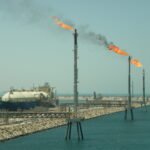
The conflict has also shaken global energy markets. Oil prices have surged beyond 100 dollars per barrel, a level not seen since the Ukraine war in 2022.
The situation worsened when Iran effectively closed the Strait of Hormuz, a critical shipping route that carries about half of India’s oil imports.
India imports nearly 85 per cent of its crude oil needs. Any disruption therefore carries serious economic consequences.
Jaishankar noted that India’s energy security and the interests of its consumers remain the government’s top priority.
Diplomacy at the Centre
India continues to maintain diplomatic contact with major regional leaders. Prime Minister Narendra Modi has spoken with leaders across West Asia, including those in the UAE, Qatar, Saudi Arabia and Israel.
The goal is simple. Prevent further escalation and safeguard Indian citizens.
For India, the stability of West Asia is not just a distant geopolitical issue. It directly affects millions of families, vital trade routes and the country’s energy future.
In a region marked by uncertainty, New Delhi is urging calm and dialogue while quietly working to protect its people.
Also Read: Iran Names Mojtaba Khamenei as Supreme Leader Amid Deepening Conflict