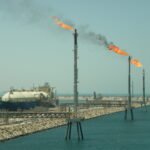
India is gearing up for a possible energy crisis following missile attacks that have greatly affected the operations of Ras Laffan Industrial City (the largest liquefied natural gas export hub in the world).
The missile attacks will ultimately disrupt approximately 80 million tonnes per year, or about 19% of total global LNG production, which will encourage companies to issue force majeure and push up energy prices.
A Major Global Supply Disruption
On the 18th of March, there were reports of strikes hitting important infrastructures in Qatar. These struck their major processing units and the Pearl GTL facility, resulting in significant fires that have caused production to stop completely with no estimated time for full recovery.
Analysts from Wood Mackenzie originally anticipated a quick restart from these disruptions but have now changed their outlook. As a result of the disruptions, the global LNG market should now expect a longer interruption, which will change the way that LNG is produced, marketed, and traded globally.
Depending on how long these disruptions last, each month that production is disrupted will mean that approximately 1.5% of the entire annual global LNG supply is taken out of the market; meaning that those markets, which are currently under stress, will be further tightened.
India’s Direct Exposure
Instantly and significantly, India will feel the ramifications of what happens in Ras Laffan. Qatar remains India’s top supplier of liquefied natural gas (LNG) with multi-year contracts providing millions of tonnes each year from large Indian-based energy companies. So, any prolonged disruption at Ras Laffan places Indian supplies at risk. Officials from the Ministry of Petroleum and Natural Gas have already confirmed this fact, stating that any disruption occurring in West Asia will have an immediate connection to India’s energy security. Additionally, India is highly dependent on Qatar for liquefied petroleum gas (LPG), which further increases its vulnerability.
Scramble for Alternatives
The response of India is to increase its energy diversification initiatives. The United States and Australia are being looked at as suppliers as it attempts to counterbalance supply shortfalls, especially should additional sanctions be placed on Iran.
India has cut the amount of crude oil it imports through the Strait of Hormuz to be approximately 70% from other sources, but liquefied natural gas (LNG) deliveries from Qatar remain high.
According to the Government, alternative deliveries will be sought wherever possible, but they also acknowledge that global competition for LNG will become increasingly fierce.
Rising Prices and Economic Impact
Gas prices on the international market have started to rise due to the disruption. Asia, which is responsible for about 90% of Qatar’s liquefied natural gas exports will experience a significant supply squeeze.
In terms of India, higher import costs could lead to higher electricity prices and will negatively affect businesses and households across the country. Also, if this situation continues to occur then it may reduce the pace of economic growth.
A Structural Market Shift
The possible effects extend well beyond just short term market fluctuations, as noted by many experts. Prior to the strike event, Qatar was producing approximately 6.7 million metric tons of liquefied natural gas (LNG) each month. If this situation continues for many more months due to an extended shutdown, it would effectively negate any expected increase in global LNG supply for 2016.
This can create a genuine structural supply shortage in the global LNG marketplace (where demand exceeds supply) over an extended time period.
Wider Regional Instability
The situation is a reflection of wider geopolitical concerns in West Asia. Disruptions in Qatar compounded with Restrictions in the Strait of Hormuz have created supply chain issues. The crisiswill illustrate how still susceptible global energy markets are due to regional conflicts.
Long-Term Implications for India
The ongoing protests not only show a current problem, but they also indicate that India relies heavily upon a small number of suppliers for its gas needs. While there are efforts to diversify India’s suppliers, there is still a high degree of dependency upon West Asia.
The disruption will likely delay future supply increases, such as Qatar’s North Field East project, causing even more challenges to longer-term planning.
A Turning Point for Energy Strategy
The current crisis may act as a turning point. Policymakers are likely to place greater emphasis on supply security, diversification, and resilience in energy planning.
For India, the lesson is clear. In an increasingly volatile world, energy security is not just about supply, but about flexibility and preparedness.
Also Read G7 Holds Back Emergency Oil Release Despite Rising Gulf Tensions