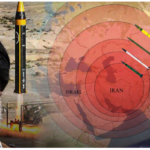
After the US and Israel recently unleashed airstrikes on Iran, the Gulf is in a state of panic due to sirens and smoke filling the streets. With the news of the assassination of Iran’s Supreme Leader Ayatollah Ali Khamenei being confirmed in the media on Sunday, this has turned what started as an isolated military operation into an unstable regional conflict.
Today we see missiles flying through the skies of the Gulf region. Oil rigs, commercial ports and military installations have all become primary targets for terrorists. Governments throughout the entire region are now trying to figure out how to respond accordingly.
Tehran Counts Its Dead
Iranian state-run news agency Mehr reported that over twenty people were killed when a terrorist organisation attacked the Niloofar Square area of Tehran. In the town of Sanandaj, Iranian government sources say that at least two others died when Israel launched an attack against them.
US President Donald Trump claimed that the coordinated attacks destroyed forty-eight Iranian leaders; the United States claims that the strike was conducted in self-defence. Yet, Iran considers this to be an act of war.
Iran quickly retaliated to the Israeli/American strikes by firing missiles and drones at Israeli locations as well as US military installations located in Bahrain, Saudi Arabia, Qatar, the United Arab Emirates, and Iraq. The exchange of fire continues.
Explosions Across the Gulf
On Monday morning explosions took place in both Abu Dhabi & Doha, with Qatar confirming an Iranian missile attack on two of its energy sites. There were no known casualties from this attack; nevertheless, both countries have closed their airspace and are patrolling their airspace with fighter jets above the Gulf of Arabia.
Meanwhile, in Kuwait City, a missile launched from the Iranian airbase at Al-Maktoum was intercepted by Kuwait’s defence forces at daybreak. One of the missile’s debris struck two workers who were working at the Mina Al Ahmadi oil refinery. Witnesses told local reporters that they saw a smoke trail coming from the location of the US Embassy.
In Bahrain the government activated their air raid alert system as a result of having a piece of missile debris fall in their territory due to the Iranian missile attack. The location of the debris caused a fire close to a military base located near the Mina Salman Port; therefore, citizens were advised to stay indoors.
Off the coast of Oman, an explosives-laden boat attacked the oil tanker, MKD VYOM, which killed at least one crew member and raised further concerns about the security of maritime vessels.
Israel, Lebanon and Beyond
Israel has claimed that missiles originating from Iran have again been fired at its territory, and its air defence systems are still operational.
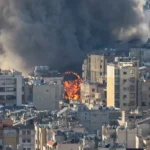
Israeli airstrikes also occurred in Lebanon against the southern area of Beirut and the southern region of Lebanon. At this time, no official figures have been issued on the number of casualties resulting from the bombings, but it is believed to include dozens of casualties. Civilian casualties due to debris from missiles have also occurred around Damascus. Sirens sounded in Aqaba, a Jordanian coastal city, and Amman is restricting air traffic through the airspace of Jordan.
At the same time, there were reports of a Shahed drone attacking the Akrotiri Royal Air Force base, part of the Sovereign Base Areas of the UK, in Cyprus, and limited damage was reported.
A Region Holding Its Breath
US forces have suffered casualties. Defence Secretary Pete Hegseth is due to address the media. President Trump has vowed to continue operations until all objectives are achieved.
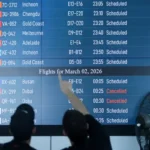
Meanwhile, commercial flights are suspended in parts of the Gulf. Oil markets are jittery. Diplomats are urging restraint.
Day three closes with no sign of calm. The Gulf remains tense. The next move could define the region for years.