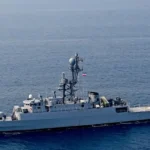
Iran’s announcement, which represents an attempt at diplomatic strategy, allows commercial ships from selected “friendly” nations to travel through the critical Strait of Hormuz even during the ongoing conflict in that part of the world. According to Iran’s foreign minister Abbas Araghchi, the countries involved include India, China, Russia, Iraq and Pakistan. This news comes during a global shipping crisis due to disruptions to major shipping lanes; thus, the news is significant both economically and geopolitically. It also shows that Iran, despite its involvement in warfare, can cooperate strategically with selected nations.
Strait of Hormuz: The World’s Energy Lifeline
The Strait of Hormuz is described as one of the most important maritime routes in the world. It connects the Persian Gulf with Oman & carries many of the world’s oil shipments.
Prior to the onset of hostilities, there were over a hundred vessels transiting that strait each day. Today, there are only 1 or 2 per day. This is causing alarm regarding both global supply chains and the energy market.
Iran appears to be preserving critical trade links by opening its waters to certain countries; however, it retains control of this critical chokepoint, & the international community cannot afford to ignore it.
Sovereignty Claims and Strategic Messaging
Tehran has asserted its authority over the Gulf, whereby the Gulf exists within both Oman and Iran’s territorial waters.
However, I must stress that this statement of sovereignty is not an example of legal terminology only; it is an example of Iran asserting its authority during a time of war by controlling access to the Gulf, which is indicative of being the region’s gatekeeper.
He has also indicated that an additional arrangement for passage of ships may be established after the conclusion of the war, thereby possibly altering the manner in which international shipping will function in this area of the world that represents one of the busiest international maritime corridors.
India’s Role and Regional Cooperation
India’s being included within the group of nations that are allowed to be located near to one another shows how strategically important India is to that area of the world. India has balanced out its foreign relations through preserving relations with Western powers while also maintaining relations with regional countries.
Tehran has expressed appreciation towards India and Sri Lanka for their assistance during a recent major maritime incident. An Iranian vessel, the IRIS Dena, was wrecked by a US airstrike in the Indian Ocean earlier this month, where many lives were lost.
During this crisis, the Indian and Sri Lankan governments helped to relocate additional vessels in danger of being damaged. As a result, Iranian officials have indicated that the assistance provided by both India and Sri Lanka helped to create goodwill between these two countries at a very important time.
War at Sea and Rising Casualties
The event that led to an increase in disputes involving shipping was the sinking of the IRIS DENA (Iranian Navy) by US forces as it was returning from conducting cooperative naval operations with allies near India. Dozens of Iranian sailors died as a result of this action and subsequently increased the already high tensions between the US and Iran.
Several other Iranian ships have moored at ports in India and Sri Lanka following receipt of this information, further indicating the migration of shipping activity to safer areas due to continuing hostilities.
Diplomacy in Deadlock
Deteriorating conditions and relationships on the high seas indicate limited cooperation; however, ongoing diplomatic initiatives are at an impasse. Negotiations between Abbas Araghchi’s side and the U.S. have been entirely ruled out, unlike Donald Trump, who has indicated that negotiations are being conducted via intermediaries. According to Iran, the only exchanges of messages have occurred through credible countries, and therefore Iran is not ready for any formal negotiations at this time. Iran’s current strategy remains to exercise resistance and defence.
Conflicting Signals from Washington
The messages about Iran’s situation from the U.S. have been contradictory. U.S. President Donald Trump has warned of more military action in addition to providing hints at a potential agreement with Iran.
More recently, he issued a warning to Iran that they need to quickly have negotiations with the United States because time is “running out”. Also, the reports indicate that the Pentagon is increasing the U.S. military presence in West Asia, creating the possibility of further escalation. In addition to these rumours, several countries — Pakistan, Türkiye, and Egypt — are said to be facilitating indirect negotiations between Iran and the U.S.
A Region on Edge
Iran has turned down a US overture to end the conflict and called the offer insufficient. In return, Tehran has issued its own conditions which include security guarantees and reparations. The future of the Strait of Hormuz will probably remain a focal point of these negotiations since controlling this waterway allows for economic power and strategic advantages over one’s opponents.
While the conflict continues to unfold further, Iran’s decision to allow certain passageways continues to show the need for Iran to balance its interests (i.e., maintain alliance partners, project strength, and shape perceptions globally).
Also Read Jaishankar Hails Talks With Iran to Reopen Strait of Hormuz